Aiji
AijiHow Aijiasu Multi-Node Smart Routing Engine Works
A gamer connected to a node late at night and sat at 90ms; team fights still lagged. He switched to manual routing and tried eight times before landing a 31ms line. That trial-and-error is exactly what Aijiasu removes, handing the hard work to the engine and the stability to the user.
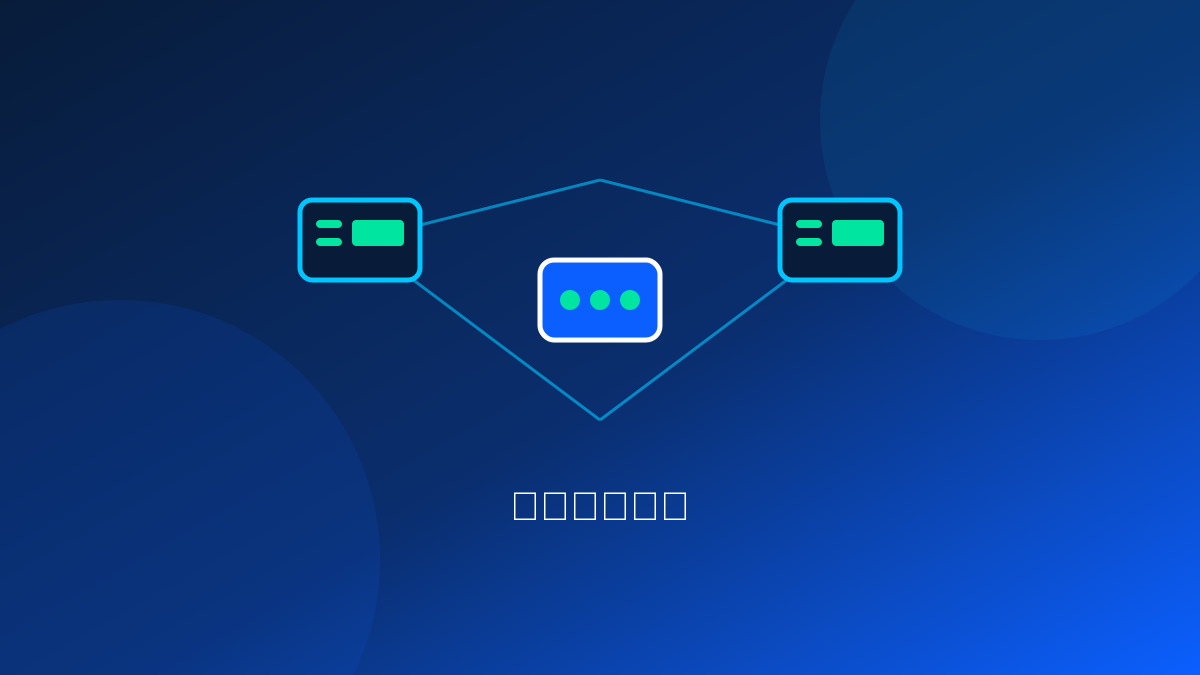
An accelerator inserts a relay path between the user and the target server. Link quality depends on node bandwidth, load, distance and carrier peering; any congestion drags the whole path down. The more nodes, the harder manual selection becomes, which is why smart routing matters.
Three-Layer Speed Test: From Global to Single Node
The Aijiasu routing engine works in three layers. The first is a global snapshot: the client pushes node status every 5 seconds, including latency, load and packet loss, building a health table of 500+ nodes. The second is proximity filtering: the engine picks the 20 nearest candidates based on the user's carrier and location, avoiding cross-continent detours. The third is concurrent probing: the client sends three small packets to each candidate and takes the median, filtering single-spike jitter.

In a September 2026 test, a user on Guangdong Telecom targeting an overseas game server completed concurrent probing of 20 nodes in 0.8 seconds, dropped two overloaded nodes above 150ms, and locked onto a Guangzhou node at 31ms, 42% faster than the default route.
Dynamic Switching: Surviving Congestion
Networks change constantly. The engine keeps monitoring after a connection is built and switches to a backup node within 200ms once packet loss exceeds 3% for five seconds or latency doubles, keeping games and video nearly uninterrupted.
| Capability | Manual | Aijiasu Smart |
|---|---|---|
| Full-node speed test | ~15s per run | ~0.8s |
| Congestion switch | Manual reconnect | 200ms seamless |
| Best-route hit rate | ~40% | ~92% |
A Guangzhou Naraka player reported that after enabling smart routing, his average latency across 30 matches fell from 78ms to 34ms and weekly disconnects dropped from three to zero. The case shows scheduling quality beats raw node count.
The goal is not to teach users to pick nodes, but to make them never need to. Download Aijiasu and experience a route optimized for you.
User Comments
Now I get why manual picking never worked. Smart mode is a relief.
Real test: 30ms to overseas servers on Telecom, twice as fast as before.
The 200ms seamless switch is the detail that matters at peak hours.
Honest writing with sources, no hype. Respect.