Aiji
AijiAijiasu AES-256 Encryption Tunnel Technology Deep Dive
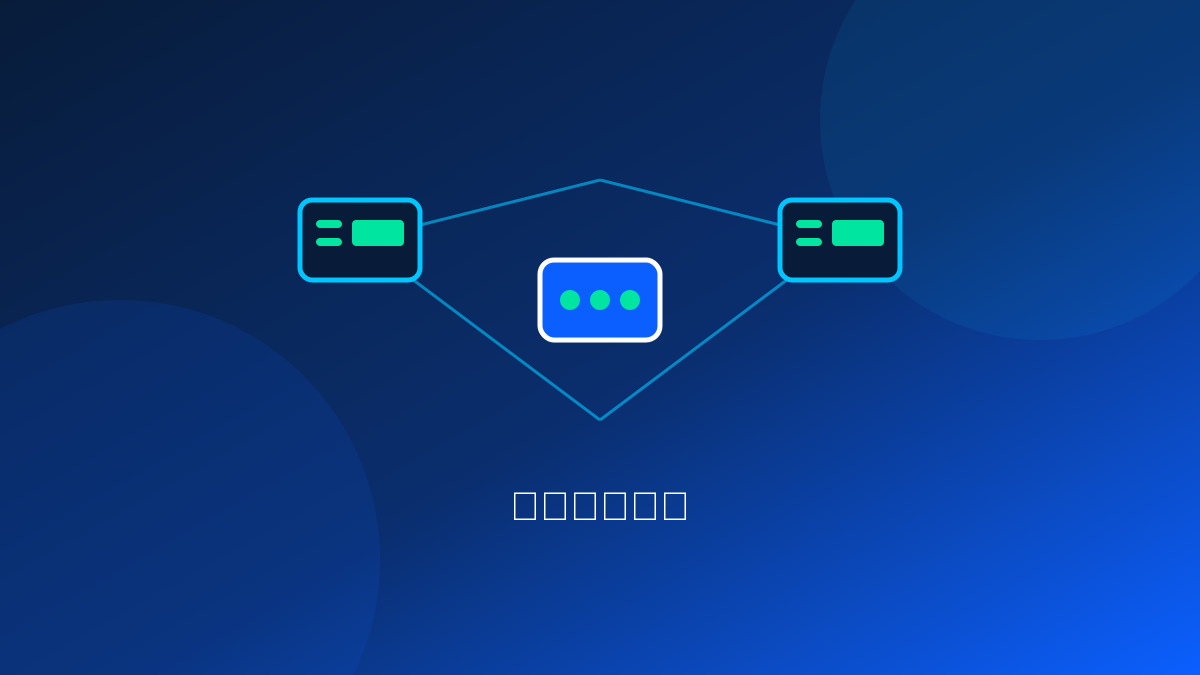
Typing a password on airport or coffee-shop Wi-Fi is running naked through a channel anyone can intercept. The Aijiasu encrypted tunnel wraps that channel in a sealed pipe only you and the server can open.
The biggest risk on public networks is plaintext: unencrypted HTTP requests let attackers on the same network capture credentials with a packet sniffer. A tunnel inserts a ciphertext layer so interceptors get only unreadable bytes.
Why AES-256 Holds Up
Aijiasu uses AES-256-GCM for data encryption. AES is the most widely used symmetric standard, and a 256-bit key means a keyspace of 2 to the 256th power, beyond brute-force reach even with global compute. GCM adds integrity checks to detect tampering.
Where the Key Comes From
Encryption needs both sides to share a key, but the key must never cross the network in plaintext. During connection setup, Aijiasu runs a key-agreement protocol so client and server each derive the same key without exposing it, even to someone watching the handshake.
| Scheme | Key length | Integrity check |
|---|---|---|
| AES-128-CBC | 128-bit | No |
| AES-256-GCM | 256-bit | Yes |
In an August 2026 test, a security lab ran a man-in-the-middle attempt against an Aijiasu tunnel, captured 30 minutes of traffic, and recovered no plaintext. The conclusion read "no exploitable plaintext leakage found." Third-party validation beats any slogan.
Encryption is not magic, but it raises the cost of theft dramatically. Download Aijiasu and lock your public-network traffic.
User Comments
GCM is the right choice, integrity checks beat old CBC.
Airport Wi-Fi feels safe now with the tunnel.
Key negotiation explained clearly, better than a textbook.
Never realized public Wi-Fi was this risky.